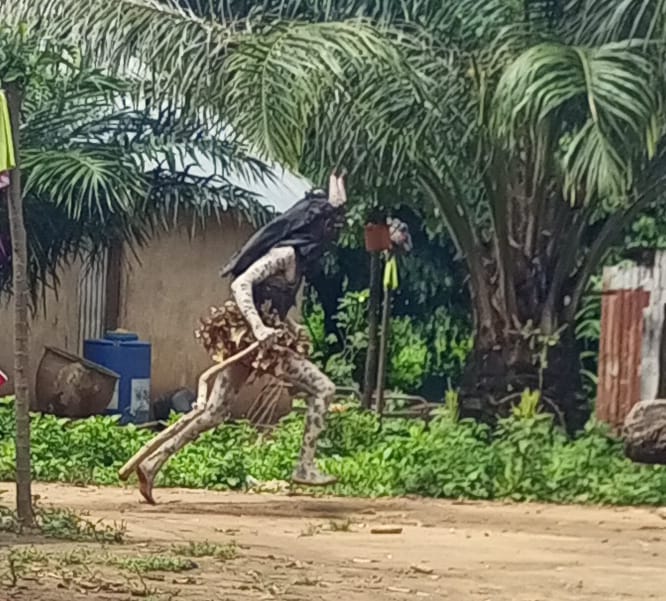
IHIKE AS A THRONE PREPARATION
By Comr. Hassan Mohammed
hassanmohammed1890@gmail.com
08240820333
SA on Culture and National Bassa Day to the President, BCDU, Chief Dr. Peter T. Tukura (PhD)
INTRODUCTION
Ozomoyikwo has guided us to understand that, in Bassa land, leadership transitions are not matters to be rushed or handled casually. They are carefully guided by elders, traditional institutions, established customs, and the spiritual beliefs of the people. One of the sacred traditional processes through which the Bassa people honour and regulate this transition is known as Ihike.
In every traditional kingdom, the end of one reign and the beginning of another is a delicate and significant moment. It is a period of mourning, reflection, thanksgiving, spiritual cleansing, and preparation for the future. Among the Bassa people, this transition is not left to chance. It is marked by a powerful traditional institution and ritual known as Ihike.
Ihike is much more than a ceremony associated with the death or departure of a king. It represents a spiritual cleansing, an expression of gratitude to the ancestors, a remembrance of the departed ruler, and a formal preparation of the throne for the emergence of the next ruler.
Through sacrifices, traditional rites, incantations, masquerade performances, drumming, communal gatherings, libation, and other cultural practices, the Bassa people symbolically close one chapter of leadership with dignity and prepare the community for another.
To understand Ihike is, therefore, to understand how the Bassa people perceive leadership. Leadership is not viewed merely as an avenue for personal authority or political power; rather, it is regarded as a sacred responsibility entrusted to an individual, guided by tradition, and watched over by both the living and the ancestors.
WHAT IS IHIKE?
Ihike is a traditional ritual performed at the end of a king's reign. It consists of a series of sacrifices, ceremonies, and traditional rites through which the tenure of the late ruler is formally brought to an end and the spiritual and traditional foundation for the next ruler is prepared.
Ihike is therefore more than a funeral ceremony. It represents the Bassa people's deep relationship with the spiritual world, their ancestors, and the traditional institutions that govern their communities.
It is a period of worship, remembrance, thanksgiving, purification, and renewal. During Ihike, the community honours the gods and ancestors believed to have watched over the land throughout the reign of the late king. The people also seek their blessings, protection, peace, and guidance as the community prepares to enter a new era of leadership.
In this sense, Ihike serves as a bridge between the past and the future. It acknowledges the contributions and legacy of the departed ruler while creating the spiritual and traditional conditions necessary for the emergence of another leader.
IHIKE AND TUBANE TA AGUMA
In some circumstances, Ihike may be combined with another important traditional ceremony known as Tubane ta Aguma, which refers to the outing ceremony of a king who, due to circumstances, was unable to witness his own outing during his lifetime.
In Bassa tradition, the outing ceremony is regarded as mandatory. It provides an opportunity to publicly display the ancestral staff of office entrusted to the king by the ancestors. The staff is an important symbol of authority, legitimacy, continuity, and the connection between the ruling houses.
When Tubane ta Aguma is performed alongside Ihike, the two ceremonies reinforce the continuity of traditional leadership. They connect the departed ruler, the ancestors, the ruling houses, the present generation, and the incoming generation.
Thus, the ceremonies collectively demonstrate that although individual rulers may come and go, the institution of traditional leadership continues.
HOW IHIKE IS ORGANIZED
The organisation of Ihike is traditionally undertaken through collective consultation and deliberation. Elders, title holders, members of the royal institution, family representatives, and other important stakeholders assemble at the palace to deliberate on the arrangements.
One of the major issues considered is the question of succession, particularly where the throne operates according to a rotational arrangement among recognised ruling houses. Such matters are handled with great care because traditional leadership is not regarded simply as an individual affair but as a responsibility that affects the entire community.
TIMING OF IHIKE
Timing is also important. Ihike is usually organised during the dry season, particularly after the farming and harvesting period. This allows members of the community to participate fully without the demands and distractions associated with agricultural activities.
The timing also provides an opportunity for families and households to prepare adequate food, traditional drinks, animals, and other materials required for the ceremonies.
Before a date is finally fixed, the palace also considers the production cycle of traditional drinks, particularly Uluka, also known as Burukutu, and Ushenje, also known as Pito.
These traditional fermented grain drinks are central to the ceremony and are prepared in substantial quantities for the expected guests, elders, title holders, and members of the community.
THE ROLE OF TITLE HOLDERS
Title holders play a significant role in the organisation and successful completion of Ihike. Each title holder is traditionally assigned specific responsibilities, including the presentation of a stipulated quantity of local wine as a mark of respect, tribute, solidarity, and admiration.
Among the title holders associated with this responsibility are:
- Secera — Wodi
- Igekpe — Sekpa
- Sa'ada — Tukura
- Berezhe — Gata
- Madachi — Kaura
These contributions are not merely material offerings. They represent the collective responsibility of the traditional institution and demonstrate the respect and loyalty of title holders towards the throne and the community.
THE ROLE OF PALACE WOMEN

Women of the palace also occupy an important position in the preparation and success of Ihike. They are traditionally responsible for preparing large quantities of Uluka and Ushenje, using grains such as maize, millet, or guinea corn.
Their role demonstrates that the success of Ihike is not the responsibility of one individual or group alone. Men, women, elders, title holders, families, in-laws, traditional performers, and the wider community all have specific responsibilities.
The preparation of these traditional drinks is therefore both a cultural duty and a demonstration of communal cooperation.
THE ROLE OF IN-LAWS AND THE PRACTICE OF I'NWE
In-laws also have traditional responsibilities during Ihike. They are expected to make specified financial contributions, while some are required to present goats. Those who present goats may also be expected to provide traditional clothing.
This process is known as I'nwe.
I'nwe demonstrates the importance of kinship, marriage relationships, solidarity, and mutual responsibility within Bassa society. It reminds the community that traditional ceremonies are sustained through collective participation and that family relationships extend beyond the immediate household.
In Bassa culture, these contributions should not be viewed merely as catering arrangements. They are understood as traditional obligations associated with the ancestors, the community, and the proper observance of the ceremony.
EXPECTED GUESTS AT IHIKE
Ihike is a community-wide occasion that brings together people from different parts of Bassa land and beyond. Among the expected participants and guests are:
1. Traditional rulers — Sheguma, from neighbouring communities.
2. Masquerades — Tuwa, representing different shrines.
3. Traditional drummers — Sumakada.
4. Flute players — Ugezhima.
5. Traditional singers — Araga.
6. Clan heads — Udenji, including Ambereche, Arenje, Ashashama, Akwakwa, Ekubiri, and others.
Their participation demonstrates that Ihike is not a private family ceremony. It is a major traditional institution involving different layers of Bassa society.
THE SACRED SPACE
Before the arrival of the traditional performers and other guests, a special area within the palace is fenced with grasses and leaves. This space is regarded as sacred and is subject to strict traditional restrictions.
Traditionally, women and underage males are not permitted to enter this restricted area. The restriction reflects the belief that certain aspects of the ceremony belong exclusively to the initiated elders, title holders, and custodians of the traditional institution.
The sacred space therefore serves both a spiritual and cultural purpose. It protects the sanctity of the rites and provides an environment in which the custodians of the tradition can perform their responsibilities without interruption.
THE NIGHT CEREMONY
In the evening, masquerades enter the palace area accompanied by traditional drummers and flute players. The atmosphere gradually changes as the community moves into the central phase of the ceremony.
The major activities traditionally begin around midnight. The sound of drums fills the community, accompanied by the distinctive sounds of traditional flutes and the voices of the masquerades.
The atmosphere can be intense and spiritually charged. The masquerades produce loud and frightening sounds, symbolically representing the presence of the spiritual world and the ancestors.
Among the traditional instruments are the Ugidigbo drum, played by Atwa Wapa, whose high-pitched tones can resemble the cry of a young animal in the bush, and Bizechi, whose powerful sound is likened to the roar of a lion in the jungle.
These sounds are not simply forms of entertainment. Within the cultural understanding of Ihike, they signify the presence of the spiritual world, the awakening of ancestral consciousness, and the solemnity of the occasion.
THE MORNING AFTER
By morning, the elders begin visiting the homes of the title holders, starting from the lowest rank and proceeding according to the established traditional order.
At each house, Uluka is presented in abundance as a tribute to the ancestors. Some of the drink may be consumed by the elders as part of the traditional gathering, while another portion is poured at family tombstones as libation.
The act of pouring libation represents remembrance and communication with the ancestors. It symbolically acknowledges those who came before and expresses gratitude for their role in protecting and guiding the community.
Meanwhile, the masquerades move around the community and neighbouring villages, while members of the community return to the late king's palace for the concluding stages of the ceremony.
THE IHULOE AND COLLECTIVE TRIBUTE
One of the important aspects of the concluding phase involves the presentation of traditional drinks by members of the community.
Individuals and families bring their tributes, measured in litres, which are collectively poured into a specially prepared moulded pot known as Ihuloe.
The collective pouring of the drinks represents the unity of the community. Each individual contribution becomes part of a larger communal offering, symbolising the idea that the strength of the throne depends on the collective strength and unity of the people.
The Ihuloe therefore carries a deeper meaning beyond the physical collection of traditional drinks. It represents a collective farewell to the past reign and a symbolic opening of the way for the next chapter of leadership.
DURATION OF IHIKE
Ihike is not necessarily a one-day event. Depending on the community, the number of activities involved, and the circumstances surrounding the transition, the complete process may take one to two weeks.
This extended period allows the various rites, consultations, visits, tributes, performances, sacrifices, and communal activities associated with the ceremony to be properly observed.
The duration also reflects the seriousness with which the Bassa people approach traditional leadership transitions. It provides sufficient time for the community to mourn, reflect, honour the departed ruler, perform the required rites, and prepare spiritually and culturally for the future.
THE CULTURAL SIGNIFICANCE OF IHIKE
Beyond the individual rituals and ceremonies, Ihike carries several important lessons about Bassa society.
First, it demonstrates the importance of continuity. A king may die or complete his reign, but the institution of leadership continues.
Second, it promotes unity. Different families, ruling houses, title holders, clans, women, youths, traditional performers, and neighbouring communities come together for a common purpose.
Third, it reinforces respect for elders and traditional institutions. The knowledge and guidance of elders remain central to the proper conduct of the ceremony.
Fourth, Ihike preserves cultural identity. Through traditional music, masquerades, indigenous drinks, language, rituals, titles, and communal participation, younger generations are exposed to practices that might otherwise disappear.
Finally, Ihike teaches that leadership is a sacred responsibility. The throne does not belong permanently to one individual. It is entrusted to a ruler for a period and must eventually be handed over in accordance with tradition.
CONCLUSION
Ihike is an important aspect of Bassa political, spiritual, social, and cultural life. It provides a traditional framework through which the community closes one chapter of leadership with dignity, honours the departed ruler, acknowledges the ancestors, and prepares the throne for the emergence of new leadership.
It is also a powerful demonstration of unity in diversity. The different roles performed by elders, title holders, women, in-laws, clan heads, traditional rulers, masquerades, drummers, singers, and ordinary members of the community reveal that the preservation of Bassa tradition is a collective responsibility.
Most importantly, Ihike reminds us that leadership is temporary, but the institution of leadership and the traditions that sustain the community endure.
As the wisdom of our elders teaches us, when we sit together in unity, the community finds peace and the throne remains strong.
Therefore, preserving Ihike is not simply about preserving an old ceremony. It is about preserving the history, values, identity, spirituality, communal bonds, and traditional knowledge of the Bassa people for generations yet unborn.
Our traditions are our identity. Our elders are our custodians. Our unity is our strength. And our culture is the bridge connecting our past to our future.
💬 Discussions (2)
Very articulated
This is well articulated.
Oku dua nugondu