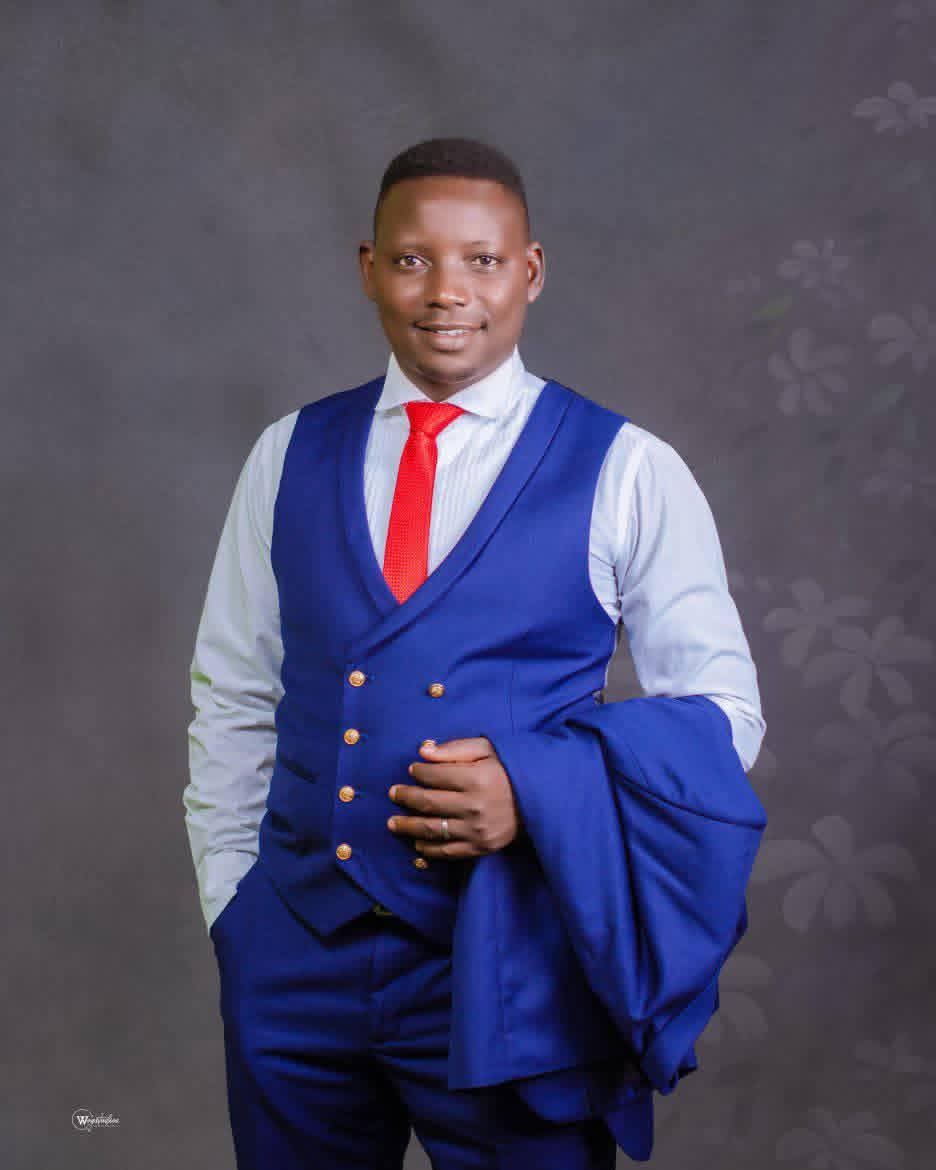
OUR TIME TO BUILD FOR TOMORROW: A SPEECH DELIVERED BY COMARDE SUMAKADA AMOS AT THE NATIONAL ASSOCIATION OF BASSA STUDENTS (NABS) BASSA DAY, FEDERAL UNIVERSITY LOKOJA. 21st AUGUST, 2026
PROTOCOL
I stand before you today not merely as a speaker, not merely as a student, and not merely as a son of the Bassa soil. I stand before you as a stakeholder in an unfinished story. I stand before you with fire in my chest, conviction in my voice, and an unyielding love for a people whose greatest chapters have not yet been written.
The story of the Bassa Nation is not a story that belongs only to our ancestors. It is a story that has been handed to us. And today, the question before us is not simply, who were they? The greater question is Who will we become? And perhaps even more importantly, what will we leave behind?
Before I proceed, let me invoke the timeless words of the great Pan-Africanist, Dr. Kwame Nkrumah, and the first President of Ghana who said “We face neither East nor West; we face forward.”
Today, I invite every Bassa son and daughter in this hall to face forward. Not with the timidity of those who have forgotten where they came from, but with the boldness of those who know exactly where they are going. Not backward in nostalgia. Not sideways in envy. But forward together, deliberately, courageously, and without apology. Because the future will not ask us what we intended to build. History will ask us what we actually built.
WHAT ARE WE?
Every great journey of building begins with a profound act of remembering. You cannot build for tomorrow if you do not understand the foundation upon which you stand today.
The Bassa people, stretching across Kogi State, Nasarawa, the Federal Capital Territory, Niger, Benue and beyond are a people of resilience, courage, cultural richness, and deep communal values. We are farmers and warriors. Storytellers and nation-builders. A people who endured. A people who survived. A people who carried their identity through generations.
Our ancestors carved civilizations out of the earth long before the boundaries of modern Nigeria were drawn on colonial maps. But let me be honest with you today. Because honesty is the first currency of legacy.
The legendary South African leader, Nelson Mandela, once said “A nation should not be judged by how it treats its highest citizens, but its lowest. If we are to be judged by this standard, then we must have the courage to ask ourselves difficult questions.
How are our villages? How are our schools? How are our hospitals? How many of our children still walk long distances to schools that lack basic facilities? How many of our mothers still face life-threatening conditions because healthcare remains beyond their reach? How many of our brightest minds, young people just like you sitting in this hall, are languishing under the weight of poverty, marginalization, and neglect?
These questions are not designed to shame us. They are designed to awaken us. Because a people who cannot confront their problems cannot conquer their future.
And as the great Chinua Achebe wrote in The Trouble with Nigeria: “The trouble with Nigeria is simply and squarely a failure of leadership.” And I say to you today that the trouble with any nation including our Bassa WNation, begins the moment its educated sons and daughters choose comfort over commitment, personal ambition over collective progress, and silence over service.
Our problem is not that we lack intelligent people. We have them. Our problem is not that we lack educated people. We have them. Our problem is not that we lack talented young people. Look around this hall. They are here. The question is what are we doing with what we have?
WHAT DOES IT MEAN TO BUILD FOR TOMORROW?
Building for tomorrow is not an abstract slogan to be printed on banners and forgotten after today's celebration. Building for tomorrow is a philosophy of responsibility. It is a declaration that says I will not consume everything I have today. I will plant seeds whose shade I may never sit under.
The ancient Greek proverb says“A society grows great when old men plant trees whose shade they know they shall never sit in.”
But I want to localize this wisdom. In Bassa nation, our forefathers cleared forests, fought wars, preserved customs, protected families, and passed down traditions not merely for themselves, but for generations they would never meet. That generation is us.
And now the question has changed. What are we clearing? What are we fighting for? What are we preserving? What are we building for those who will come after us?
Because if every generation consumes what the previous generation built, eventually there will be nothing left to inherit. But if every generation builds upon what it inherited, then the nation rises.
Building for tomorrow demands four pillars, and I want to lay them before you today like a blueprint for the soul.
- EDUCATION
You are students. You are sitting in a federal university. Do you understand the sacred privilege of that position?
There are millions of children across Nigeria who are out of school. Many of them are Bassa children. Many of them are your cousins, your neighbors, children from your own villages.
Your education is therefore not yours alone, it belongs to your community. It belongs to the old woman in your village who sold her last bag of groundnuts so your transport fare could be paid. It belongs to the father who broke his back on the farm so you could hold a pen instead of a hoe. It belongs to the family that sacrificed today so that you could have a tomorrow.
Therefore, when you graduate, do not ask only “What can my degree do for me?” Ask instead “What can my degree do for my people?”
The first President of independent Senegal, Léopold Sédar Senghor, said “The African is not devoid of reason; his reasoning is founded on emotion, rhythm, and intuition.”
Let your education marry reason with emotion. Let your degrees carry the rhythm of your people's aspirations. Let your knowledge be guided by the intuition that tells you that you were not educated to escape your people, rather you were educated to elevate them.
Dr. Nnamdi Azikiwe, the first President of Nigeria and a man who understood the transformative power of education, declared “My stiffest earthly assignment is to make the ordinary Igbo man and indeed every African, realize that his condition is not ordained by God but can be changed by human effort.”
Replace “Igbo man” with “Bassa man” and “Bassa woman,” and you have the mandate of your generation. Your assignment is to go back to your communities not just with certificates, but with solutions. Not just with knowledge, but with commitment. Not just with ambition, but with responsibility.
Every Bassa student who graduates and never looks back is a bridge that builds itself and then burns itself down. Don't be a burned bridge, be a highway. Let others cross because you were there. Let others rise because you rose. Let others dream because you refused to stop dreaming.
2.UNITY
I want to dwell on this because it is perhaps the most urgent challenge facing the Bassa Nation today. We are a people often divided by clan, by local government area, by political affiliation, by religious denomination, and by petty rivalries that serve no one but those who benefit from our weakness.
While we fight among ourselves over crumbs, other nations are building empires of influence. While we ask who belongs to which faction, others are asking who will control the future. While we count our differences, others are multiplying their strength.
The great Pan-Africanist and first President of Tanzania, Mwalimu Julius Nyerere, said “Unity will not make us rich, but it can make it difficult for Africa and the African people to be disregarded and humiliated.” If this is true for a continent, how much more is it true for a nation within a nation?
Unity will not automatically make the Bassa Nation wealthy. But unity will make it much harder for us to be ignored. Unity gives us a voice. Unity gives us bargaining power. Unity gives our young people a network. Unity gives our communities strength.
Look around this hall. Look at the person sitting to your left and to your right. These are not your competitors. These are your allies.
These are the doctors who will build our hospitals. The lawyers who will defend our interests. The engineers who will construct our roads. The teachers who will educate our children. The entrepreneurs who will create opportunities. The policymakers who will shape our future. The leaders who will represent our people.
When you leave this hall today, do not leave as isolated individuals. Leave as an army of purpose.
The late sage and Premier of the old Northern Region, Sir Ahmadu Bello, the Sardauna of Sokoto, said“Let us forgive the mistakes of yesterday. Let us forget the quarrels of yesterday. Let us set to work today to build our country.”
I echo his words today Let us forgive the divisions of yesterday. Let us forget the rivalries that weakened us. Let us put aside the grudges that have kept us small. Let us set to work today to build the Bassa Nation into a force that commands respect, inspires emulation, and leaves an indelible mark on the pages of Nigerian history.
But let me add this, Unity does not mean uniformity. You can disagree and still be united. You can belong to different political parties and still share a common vision for our people. You can worship differently and still build together. You can come from different communities and still carry one destiny.
3. ECONOMIC POWER
A people who do not control their economy will never control their destiny. Education without economic power is a beautiful cage. Unity without wealth creation is organized poverty. Walk through any Bassa community, count the factories, the processing plants, the sustainable enterprises. Now count the graduates waiting for government jobs that will never come, exporting their brilliance to build other people's empires while ours crumble. This is economic suicide, and it should end NOW.
Every prosperous ethnic nationality in Nigeria shares one trait: they Produce, they Create, they Own. We possess fertile land, mineral resources, and brilliant minds filling this hall. The only thing we lack is the audacity to build economic empires and the discipline to sustain them. We've been conditioned to fear failure more than mediocrity, to celebrate employment over entrepreneurship. This mental prison must be shattered today.
Reclaim agriculture, modern agribusiness is processing, packaging, exportation, agro-tech, BILLIONS waiting to be unleashed. Stop hunting city jobs. Return home and build agricultural empires that employ hundreds and feed thousands.
Our mineral resources sit beneath our feet while strangers negotiate their extraction and pocket the profits. We must develop the technical expertise, legal knowledge, and organized capital to become active owners in industries sitting on our own land. A people who cannot leverage what they stand on will always be moved.
We must also discipline how we handle money. A naira that enters a Bassa hand and immediately leaves a Bassa community is a naira working against us. Other nationalities reinvest within, multiply what they have, and grow. We must do the same. Circulating wealth internally is not tribalism, it is strategy.
Cooperative societies, investment clubs, and community development funds are not luxuries, they are survival tools. When our people have nowhere to turn for capital except strangers, we will always build on borrowed foundations. We must fund each other, set our own terms, and keep profits where they belong.
Finally, raise the next generation to think like owners, not applicants. Our successful businesspeople must mentor, open doors, and invest in young Bassa entrepreneurs before they take their gifts elsewhere. Economic power is not inherited, it is deliberately transferred. If we fail to transfer it, we will repeat this conversation in another twenty years, wondering why nothing changed.
4. LEGACY
What is legacy?
Legacy is not merely the wealth you accumulate. Legacy is not the titles you acquire. Legacy is not the buildings you construct with your name inscribed on them. Legacy is what remains when you are gone.
Legacy is the answer to the question your great-grandchildren will one day ask “What did my ancestors do when they had the opportunity to make a difference?”
Marcus Garvey, the great Jamaican Pan-Africanist who inspired millions of Black people across the globe, thundered “A people without the knowledge of their past history, origin, and culture is like a tree without roots.”
A people who know their history but refuse to write new chapters are like a tree with roots but no fruits. We must bear fruit. We must build. We must create. We must preserve. We must serve. We must leave something worth inheriting.
The question of legacy is deeply personal, and it is deeply collective. Every one of you in this room will leave something behind. The only question is Will it be something worth inheriting? Think about the great men and women of Nigerian history.
Think about Chief Obafemi Awolowo, who, regardless of political differences, built institutions and pursued a development blueprint that transformed an entire people.
He once said“After rain comes sunshine; after darkness comes the glorious dawn.”The Bassa Nation has seen rain. We have walked through darkness. We have known disappointment. We have known neglect.
The dawn is here. And the dawn is you. You are the sunshine that follows the storm. But only if you choose to shine. Only if you refuse to be dimmed by selfishness. Only if you refuse to be divided by factions. Only if you refuse to surrender to despair.
PRATICAL STEPS TO BUILD FOR TOMORROW
I would be irresponsible if I gave you inspiration without direction.Motivation without a plan is like fuel without an engine, it burns, but it goes nowhere. So let me offer you a practical blueprint.
1. CREATE A BASSA STUDENTS DEVELOPMENT FUND
Let every Bassa student contribute, no matter how small. Let our first mission be simple, no Bassa student should face a genuine academic or financial crisis alone. Use the fund to provide essential learning materials, support students in genuine need but let it be built on transparency, accountability, and trust.
2. BUILD MENTORSHIP NETWORKS
Every Bassa graduate should be connected to at least five Bassa students still in school. Create formal mentorship networks. Share knowledge. Share contacts. Share opportunities. Open doors for one another.
In the words of Isaac Newton “If I have seen further, it is by standing on the shoulders of giants. “Be a giant for someone to stand on. Be the shoulder that lifts the next generation higher than you could ever climb alone. And when they rise, let them lift someone else. That is how generations become a movement.
3. COMMUNITY SERVICE AND ENGAGEMENT
Go back home. Not just during Christmas. Not just for weddings. Not just for funerals. Go back with purpose. Organize free tutorials in your villages. Set up health awareness campaigns. Teach digital literacy.
Let the people see that education has not taken you away from them. Let them see that education has brought you closer to their needs.
4. POLITICAL CONSCIOUSNESS AND CIVIC ENGAGEMENT
The Bassa Nation cannot afford political apathy. You must be involved, not just as voters, but as candidates, policy advocates, community organizers, and voices in the corridors of power.
Do not enter politics simply to acquire power. Enter politics to create impact. Enter politics with clean hands. Enter politics with a genuine heart. Enter politics prepared to serve. And when you do, you will help rewrite the political narrative of the Bassa Nation.
5. DOCUMENT OUR HISTORY AND CULTURE
This is urgent. The Bassa language, our folklore, our traditions, our customs, they are vulnerable to disappearing. Every time an elder passes away without their stories being recorded, a library burns to the ground.
As the legendary Malian scholar Amadou Hampâté Bâ said “In Africa, when an old man dies, it is a library that burns. ”Students of linguistics, history, sociology, anthropology, media and technology, this is your calling.
Document everything. Write books. Produce films. Record oral histories. Build digital archives. Teach the language. Preserve the traditions. The Bassa story must not be lost. It must be preserved. It must be celebrated. It must be transmitted. It must reach generations yet unborn.
THE LEGACY WE MUST LIVE
Let me paint a picture for you. Close your eyes for a moment, not literally, but in your imagination. It is the year 2050.
A young Bassa girl, born in a village that today has no electricity, walks into the United Nations General Assembly as Nigeria's Ambassador. She speaks three languages fluently, including Bassa. She references the history of her people with pride. She carries in her briefcase a proposal for sustainable development that was first conceived at a NABS meeting at Federal University Lokoja decades earlier. She stands before the world and says “I come from a people who refused to be limited.”
A young Bassa man sits in a laboratory in Abuja, having just received a patent for groundbreaking agricultural technology that has transformed food production across the Middle Belt. He remembers the Bassa Day celebration where a speaker told him “Your education belongs to your community.”
In a hospital in Sharia, Bassa Local Government Area, a state-of-the-art facility stands. And perhaps somewhere on a wall, there is a simple inscription ‘The Bassa Students Development Fund’. It began with five hundred-naira contributions from students who themselves had almost nothing.
And because they gave, others received. Because others received, they rose. Because they rose, they built. And because they built, an entire community changed. This is legacy. This is what it means to build for tomorrow. This is not fantasy. This is possibility waiting for our permission to become reality.
As Thomas Sankara powerfully declared"You cannot carry out fundamental change without a certain amount of madness. It took the madmen of yesterday for us to be able to act with extreme clarity today."
Be mad enough to believe that the Bassa Nation can be transformed in your lifetime. Be mad enough to start today. Be mad enough to refuse the narrative that says small nations from the Middle Belt cannot produce global leaders.
CONCLUSION
Today, on this Bassa Day, make a silent promise. To the children who will bear your names. To the generations who will inherit your world. To the ancestors whose sacrifices made your opportunities possible.
Promise them you did not waste it. Promise unity over division. Service over selfishness. Legacy over luxury. Purpose over popularity. Promise that when history called, you answered—not with excuses, but with action.
Gandhi said: "The best way to find yourself is to lose yourself in the service of others." Lose yourself in the Bassa Nation, and find your highest self.
Steve Biko thundered: "The most potent weapon in the hands of the oppressor is the mind of the oppressed." So free your minds. From inferiority. From tribalism. From fear. From the lie that you are too small, too poor, too marginalized to make a difference.
You are Bassa. Descendants of warriors. Thinkers. Builders. You stand at the intersection between what was and what will be. The future is watching. The children of tomorrow are waiting. Your communities are waiting. History is waiting.
Leave a legacy so powerful that generations yet unborn will say: "That was the generation that refused to remain ordinary. That was the generation that chose unity. That was the generation that built. That was the generation that changed the story."
And when they ask, "When did the Bassa Nation begin to rise?"
Let the answer be:
"It began when its young people decided the future would no longer happen to them, they would BUILD it."
Thank you.
God bless the Bassa Nation.
God bless the National Association of Bassa Students.
God bless Federal University Lokoja.
And God bless the Federal Republic of Nigeria.
💬 Discussions (1)
This is really impressive sir, I pray for more wisdom.