HISTORY OF THE BASSA PEOPLE OF NIGERIA
Somewhere in Africa, there exists a tribe called "Bassa." Though, the name of this tribe appears ambiguous as it has varieties of it's species spread across many eastern and western African countries. These notably includes; Nigeria, Cameroon, Liberia, Sierra Leone, Ivory Coast, and Liberian coasts, etc.
In general or global sense, the Bassa tribe belongs to a larger ethnic group known as the "KRU." Alongside Bassa, the other tribes that constitutes the KRU ethnic group includes; Bété, Krumen, Guéré, Grebo, Klao, Krahn people and Jebo people. This very fact cannot be merely disputed owing to the fact that these constituent tribes of KRU have similar and striking identifications in terms of cultural history, occupation, religious rituals, political organization and more.
The KRU people are also believed to have migrated somewhere from the Nilotic eastern African countries to their present abodes. While some researchers claims that the Bassa (or better as KRU ethnic group) migrated from Egypt as a country, many mote have claimed they migrated from South Sudan to their present locations on the map. Though the former have been unable to explain further whether it's claim is about Egypt as a country (Arab Republic of Egypt) or as civilization in the nilotic valley (Ancient Egypt) from 3150 BCE to 30 BCE. However, it is pertinent to note that these claims both justifies that the people originated from the Nilean axis.
On the other hand, the Bassa Speaking People of Nigeria, is a unique tribe that exists in the country. They are unique because of their special politico-socio-economic impact in the country - these impacts are the by-product of the Bassa hard-working nature: they work briskly in all fields yet these impacts frequently appears to be reserved even though they are great.
THE MIGRATION
Bassa is an indigenous tribe in Nigeria. The Bassa people predominantly occupies the central region of the country also known as the North Central or Middle belt. The geopolitical zone that consists of seven states, namely: The Federal Capital Territory, Abuja; Nasarawa; Kogi; Kwara; Plateau; Benue; and Niger.
Bassa speaking people are arguably the first or second most populated tribes dominating the Central Region of Nigeria. Although a vast number have spread across the south western parts like; Oyo, Kwara and Benin, and some still in Kaduna. Though the numbers spread across the northern parts of the country have over time been adulterated. Contrary to those across the south western parts who even have Chieftain titles considering their numbers in those parts of the country.
Historically, the teeming population of the tribe that occupies the central region of the country today, are specifically said to have come originally from a town near Zaria (of Kaduna state), named Gabi (Igebi).
According to W. B. Baikie - "Specifically, the Bassa are said to have come originally from a town near Zaria, named Gabi." The Bassa headquarters was at Gumna ("Uguma" more specifically. This will be treated better, subsequently).
It is said that to remember this origin, the Bassa sing to their progenitors:
Ga omu 'wi taa nụ Zarɛnya,
Serechi ma-ta.
Ga ada 'wi taa nụ Zarɛnya,
Serechi Ma-za.
Translation:
Mother died far away in Zaria,
Queen of Women.
Father died far away in Zaria,
King of men.
Yet, some mythological supports to this fact can be seen in a song, usually sang among the Bassa people in commemoration of their ancestors. Thus:
Ga omu namɛ ne uye Gabi
Ga ada namɛ taa nụ Zarɛnya (Zaria)
E Dengeni ga shibi hiɛn jiye yo o
E Dengeni meni na mo rungo shɛmɛ
Translation:
Mother is in grave at Gabi
Father is far away in Zaria
Dengeni, father wants you to come back
Dengeni, here, the flood is round the hill.
In addendum, there is a common tale in Bassa about Mr Spider who purportedly lost his inlaws in a far away town on the hills. As it is a tradition, the spider owes to the funeral ceremony of his inlaws. So he took with him the Toucan (Tecire); a bird that sings and a Toad (Ukwutu) which hums the drum sound to give the Toucan's song a melodious rhythm.
The Toucan sang thus:
Ci-ye Ci-ye Ci-ye...
Ci-ye Serechi Ma-za
Ci-ye Ci-ye Ci-ye...
Ci-ye Serechi Ma-ta
E'uji gazụ 'wi taa nụ Zarɛnya
Eeh! Mmh!
Ga gazụ hiɛn ti zhɛ u'wo.
Translation:
Ci-ye Ci-ye Ci-ye
Ci-ye - King of men
Ci-ye Ci-ye Ci-ye
Ci-ye- Queen of women
Mr spider inlaw died far away in Zaria
Eeh! Mmh!
Mr spider said we are going for the funeral.
This tale is told to from generation to generation (a means of preserving their history through tales).
From the foregoing, it is believed that the Bassa people definitely must have come from no where other than around Zaria.
As if to concur to the fact of where the Bassa originated, Temple further argues that the exodus of the Bassa started from Gumna; "some went north via Kamberi and Dawakin Bassa, to the Zamfara towns of Bangudu; Gedda and Kotorkoshi... Others settled in Kotangora province. Some, haven migrated there direct while others sojourned for a while at Bugu, in Nasarawa Province."
Gumna was an indigenous and independent Bassa district in Niger state of Nigeria, which suffered series of attacks and subjugation under Kotangora ethnic forces. E. G. M. Dupigny, Esq. in his compilation titled; Gazetteers of Nupe Province stated that:
"Gumna belongs to Bassa, suffered severely from Kotangora and fell under Kotangora..."
It should also be noted that Gumna (which was the headquarters of Bassa) was under Zaria in the pre-jihadist days.
Thitherto, the Bassa is akin to the Hausa (not Fulani) linguistically, backing the already established fact that the Bassa was so very close to the Hausa, geographically.
There are a lot of words that appears somewhat like homophones between the Bassa and the Hausa. Such words though, appear to differ in their spellings probably owing to the differences in the alphabets of Bassa from that of Hausa. A distinct indication is the differences in their phonetic alphabet such as; "k" and "ch," as in gaskiya and 'gechiya, sarkin yara and sechira, etc, in "i" and "ɛ," as in madawaki and madachɛ, etc, in "j" and "zh," as in magajiya and mangazhiya, lauje and 'lezhe, etc, in "d" and "zh," as in barde and 'berezhe, etc, in "a" and "o," as in mangoro and mongoro, etc, in "o" and "u ," as in rogo and 'rogu, etc, in "a" and "u," as in mota and motu, etc, in "l" and "n," as in labari and unabarɛ, etc, in "k" and "gb," as in keke and kengbe, etc, in "o" and "wo," as in gomna and gwomina, etc, in "l" and "zh," as in galadima and gezhima, others includes; sarkin pada and usada, sarkin samari and sechi semberi, shinkafa and ushɛkapa, durumi and udurumi, makaranta and makarata, rai and uraiŋ, takarda and utakrida, etc. It can be noted that while some words have similar phonetics, others have prefixes attached to the morphemes in Bassa. What can you even see in the names of the two tribes; Bas-sa and Hau-sa? If not for the slight phonological difference in their initial morphemes (that is by the way).
However, from this linguistical closeness that exists between Bassa and Hausa, yet, one can not say either the latter derived their words from the former or vise versa. But, howbeit what may, one can be very sure that the both tribes derived their words from one another - the effect of environmental interrelationship.
Furthermore, as peaceful and reserved as the Bassa people are, yet, human struggles never elude them. Of course no one should expect it. The people were faced with internecinal strife from Gumna which happens to be the Bassa headquarters in the pre-jihad days. This sole disaster was as a result of politico-religious contest for domination in the north. And sadly, this man made catastrophe greeted the Bassa grievous exodus from their initial country-side to their present abodes in the country.
The principal cause of the Bassa exodus from Gumna has been noted to be as a result of the internecinal strife that lingered in that part of their country.
Describing the people's pitiable condition in the aftermath, the Bassa people told a story thus;
"Once upon a time, there lived an orphan in a village. Quiet a remote village where the primary occupation of the inhabitants is farming. It was on this fateful day, one of the elders of the village made a call to the entire village for "itimɛ i'ɛnu" - an act whereby all men in the village are expected to go farm for the one who makes the call (Aguma ohilo).
It was dawn on this fateful day and before the sunrise could reveal clearly the face of someone, everybody was set for the farm and they get going including the orphan. On the way they have to cross a river which barely reaches the knee before they arrived the farm. The people start tilling the ground on a field that would take 'for-ever' if it was for a single man to work it. But, everyone becomes overwhelm after a short while that they have suddenly finished the farm work. Although one cannot be too amazed in a field where almost fifty men tills the ground.
"Suddenly, the 'clouds became very angry' that before they could realize, it started to 'pour it's anger' so heavily.
"All the men who went to the farm starts for home immediately. They walk until they got to the river which they crossed previously and to their greatest shock, the water that barely leveled their knees rose to the level at which it can swallow even the tallest man that was with them at the farm. Realizing this, every man turns to their families and makes units. The elderly people of each unit, help the younger ones to maneuver and cross. This is how families crossed after families until all of them crossed leaving the orphan behind and helpless as no one cares to help him. So, the orphan anyway decides to take the risk since he is left with no option in such state of dilemma. He steps into the river, manage to move forward and at same time trying so hard to resist the water current and at each level he sings a chorus. When the water level got to his waist he sang the chorus, when it got to his chest, he sang the chorus, yet, as he approaches the middle of the river, it's level had risen to his neck; he lamentably sang the chorus. And at last, when he gets to the middle of the river his head could barely show that he could not sing his chorus any longer and finally, the boy drowned and the water swept him away."
The chorus that the boy sang is a lamentation and goes thus;
Ga omu namɛ ne uye Gabi
Ga ada namɛ taa nụ Zarɛnya (Zaria)
E Dengeni ga shibi hiɛn jiye yo o
E Dengeni meni na mo rungo shɛmɛ
Translation:
Mother is in grave at Gabi
Father is far away in Zaria
Dengeni, father wants you to come back
Dengeni, here, the flood is round the hill.
The message therein goes thus;
The orphan in the story signifies Bassa.
The farm mentioned is an indication of long age occupation of Bassa.
The second paragraph explains how early the Bassa loves going to work; "before the sunrise could reveal clearly the face of one..." And the initial water level they crossed to the farm signifies the smooth living standards of the Bassa with their neighbour; in the sense that even life challenges were minor and not gruesome or worrisome to the people.
In the third paragraph, the idiomatic expressions "'clouds becomes very angry... pour it's anger'" - signifies the war that befell the Bassa in a long time past with their closest neighbor, the Hausa.
The orphan singing the song was lamenting about the very war that killed their Queen mother at Gabi - "mother is in grave at Gabi," and how their king was captured and taken to Zaria where he too was killed. While on the other line "the flood is round the hill" - is pointing to the lingering war at their country side then.
Finally, the scenario where the orphan drowned signifies the collapse of the Bassa army as a result of the killing of their warriors; the Queen and the King. And the sweeping off of the orphan by the river ultimately signifies the final EXODUS of the Bassa from Gumna and Gabi, down to their present day abodes.
This contest that led to the people's Exodus was fueled by political and religious contest whereas the Bassa's great number in that part of the country was seen by their neighbor, the hausa as a threat to their political power. In order to maintain dominance politically, the hausa could only defeat the Bassa if they joined forces with the Fulbe who has immigrated and had introduced a new religion to the people inhabiting that part of the country. Bassa had remained adamant to their African Traditional Religion and the hausa and Fulbe could not have absolute dominance over them, thus, the contest.
So, this myth is usually told to every generation of the Bassa people everywhere, everytime.
DIALECTS
In the Bassa tribe, there are distinctions observed in the standardized idiom that is considered the 'true' form of particular area, community or social group, differing from other varieties of the same language in relatively minor ways as regards grammar, phonology, and lexicon. This is to say that community impacts the tongue/language of people especially when they interrelate with other tribes. Bassa gurmana, Bassa komu, Bassa kamuku, Bassa Kwali, Bassa rukuba and Bassa akpanaja are all descendants of same progenitors, genealogically. The observed distinctions in their grammer, phonology or lexicons is simply influenced by their different communities over time. They should however not be mistaken with the Bassa Nge who are of Nupe origin.
OCCUPATION
Bassas are predominantly farmers. They cultivate crops like yam, millet, guinea corn, maize, etc. The people also engage in fishing and rearing of livestock. In addition is their skills in art - they engage in weaving and moulding of earthen pot.
Some researchers have claimed that after the Fulani, the Bassa are the next nomads - they frequently change residence in search of fertile lands for farming.
PRESSURE GROUP
Amongst many pressure groups, the national groups includes National Association of Bassa Student (NABS) and Bassa Cultural and Development Union (BCDU) whose membership cuts across all the states in Nigeria.
CULTURAL DANCE
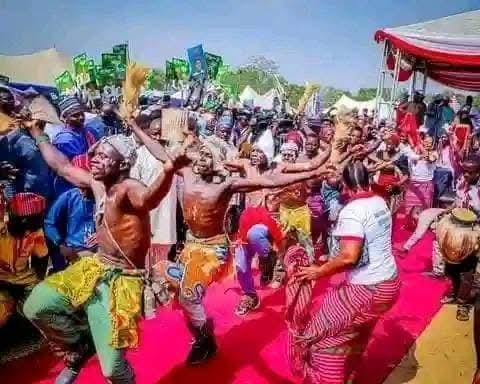
The Bassa people of Nigeria have various cultural dances. These include Ugunu, Ike masquerade, Araga, etc.
..
Some popular Bassa towns/villages include Gwagwalada, Oguma, Tawari, Ugya, Gwameni (Gbameni), Jiwa, Bassa, Turunku, Zwere, Nuku, Rubochi, Sauka, Shiroro, Oweito (Ihwetu), Rukubi, Awawa, Ubo, etc.
REFERENCES
E. G. M. Dupigny, Esq. - Gazetteers of Nupe Province.
S. S. Labaran (August 1996) - The Ugunu Cultural Festival of the Bassa People (Case Study of Toto LGA of Plateau State).
S. S. Labaran (August 2007) - The Theology of Life after Death in African Traditional Religion (Case Study of the Bassa People of Nasarawa State).
W. B. Baikie (1966) - Narrative of an Exploring Voyage up the Rivers Kwora and Binue in 1854.
W. Paul (1993) - The Bassa Speaking People of Nigeria.
Oral interviews
#bassanigeria
#followers
Written by: Samuel Jephthah Zainaba
💬 Discussions (2)
This is a revolutionary! Bassa forward always.
This is a revolutionary move! Bassa forward always.