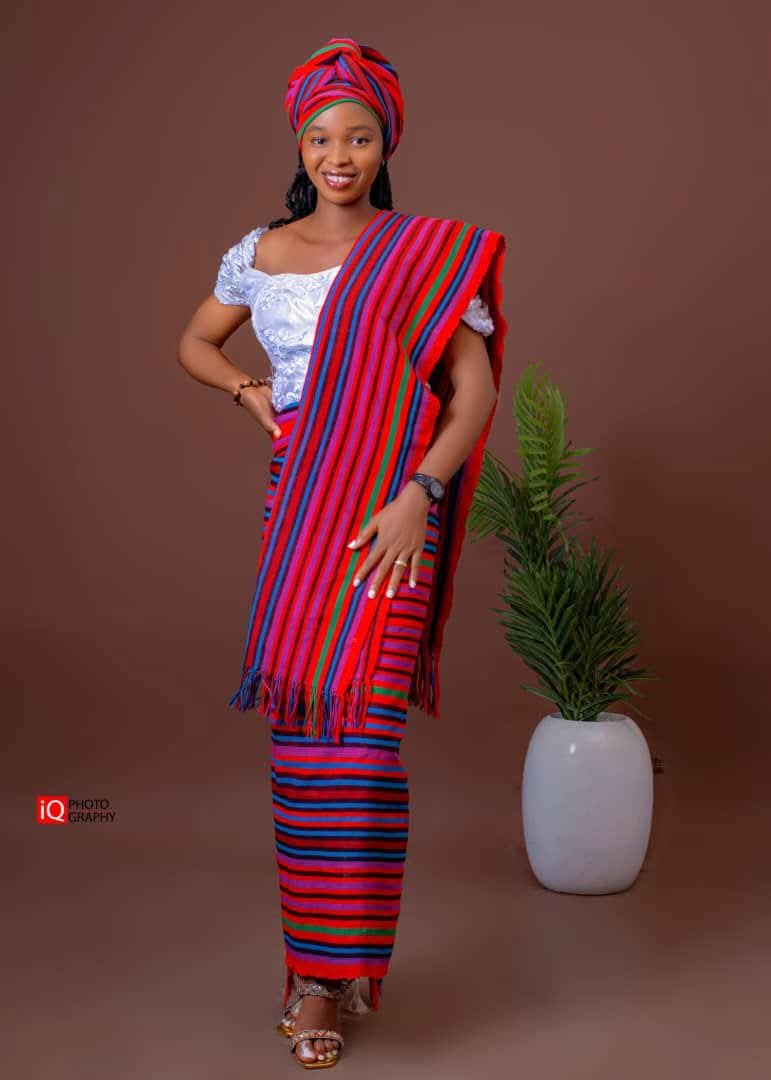
OGBORO: THE BASSA ATTIRE
The Bassa have other cultural attires but the Ogboro is a distinctive and cherished cultural attire of the Bassa people, renowned for its vibrant and intricate design. This fabric is woven with multiple colors, including red, blue, green, white, and black, which not only create a visually stunning effect but also hold significant meaning.
The Significance of Colors in Ogboro:
Each color in the Ogboro fabric has a unique significance that reflects the Bassa people's values, traditions, and relationship with their environment. The colors are not just for adornment but also convey important messages about the people's culture and way of life.
1. Red: symbolizes danger and importance. In Bassa culture, red signifies the threat of natural and man-made disasters, while also emphasizing the importance of every individual.
2. Blue: represents calmness and peace. This color reflects the Bassa people's calm and reserved nature, as well as their commitment to peaceful coexistence.
3. Green: signifies beauty, nature, growth, and new beginnings. In Bassa culture, green represents the people's love for agriculture, their connection to the natural world, and the importance of growth and development.
4. White: embodies goodness, purity, and cleanliness. This color reflects the Bassa people's emphasis on ritual purity, good moral conduct, and virtuous living.
5. Black: symbolizes evil, death, and mystery. This color acknowledges the existence of metaphysical mysteries and the inevitability of death, while also highlighting the people's resilience and ability to adapt to challenging situations.
A Rich Cultural Heritage:
The Ogboro fabric is not only a beautiful and meaningful part of Bassa cultural heritage but also a testament to the people's creativity and skill. The use of Ogboro in various cultural and social contexts, such as traditional ceremonies and celebrations, speaks of its importance in Bassa society.
The Ogboro's significance extends beyond its aesthetic appeal, as it represents the Bassa people's values, traditions, and history. As a cultural symbol, Ogboro continues to inspire and unite the Bassa people, while also captivating the imagination of people from other ethnic groups who appreciate its beauty and cultural significance.
Historical Roots:
The Ogboro's colors have historical roots, as attested by W.B. Baikie's 1916 publication "Narrative of an Exploring Voyage up the Rivers Kwora and Bi'nué in 1854". Baikie noted the use of red, white, and bluish-black colors in the decoration of huts, which are similar to the colors used in Ogboro today.
The Ogboro fabric is a proof of the Bassa people's rich cultural heritage and their ability to preserve their traditions while adapting to changing circumstances. Its significance extends beyond its aesthetic appeal, representing the people's values, history, and cultural identity.
Call to Action:
There is a need for us to adopt a unified approach in producing and knitting the same colors and patterns of the Ogboro, as they hold deep symbolic meaning. It becomes quite contradictory and disheartening when we showcase different colors and patterns, which undermines the cultural significance and uniformity that the Ogboro represents. If we can get our Bassa knitters to outline a more beautiful and culturally grounded pattern, it can then be adopted by everyone. A collective identity begins with collective effort—let’s preserve our heritage with unity and intention.
Written by:
Samuel Jephthah Zainaba
💬 Discussions (2)
This article just gave me a solid meaning and importance of Ogboro.😊🤗
Thank you very very much leader.
I have nothing much to say but I have an appeal to the youth and elders, specifically the BCDU should adopt this, about our appearance in a traditional marriage. A traditional marriage that we are suppose to appear traditionally but you will just see few numbers people wearing the Cap or headtigh, the bride will dress in another color of cotton which doesn't give a details from pass bye.
For that; I am appealing to you all that in any traditional marriage we should try and appear in our attire specifically the ogboro, the groom and the bride should dress culturally.
Thank you.