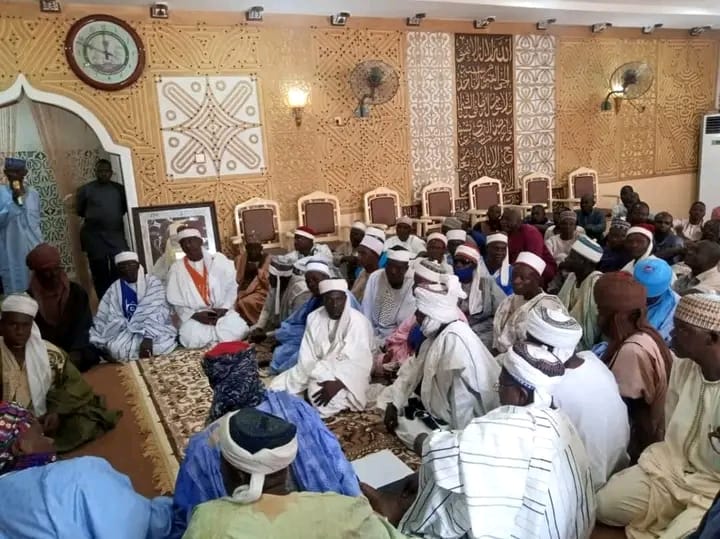
THE BASSA KINSHIP SYSTEM
In anthropology, kinship is the social relationships that form an important part of the lives of all humans in all societies, although its exact meanings even within this discipline are often debated. Anthropologist Robin Fox states that “the study of kinship is the study of what man does with these basic facts of life mating, gestation, parenthood, socialization, sibling ship etc. Human society is unique, he argues that we are working with the same raw material as exists in the animal world, but we can conceptualize and categorize it to serve social ends. These social ends include the socialization of children and the formation of basic economic, political and religious groups.
Kinship can refer both to the patterns of social relationships themselves, or it can refer to the study of the patterns of social relationships in one or more human cultures (i.e. kinship studies). Over its history, anthropology has developed a number of related concepts and terms in the study of kinship, such as descent, descent group, lineage, affinity/affine, consanguinity/cognate and fictive kinship. Further, even within these two broad usages of the term, there are different theoretical approaches.
Broadly, kinship patterns may be considered to include people related by both descent (i.e. social relations during development and by marriage). Human kinship relations through marriage are commonly called affinity in contrast to the relationships that arise in one’s group of origin, which may be called one’s descent group. In Bassa culture, kinship relationships may be considered to extend out to people an individual has economic or political relationships with, or other forms of social connections. Within Bassa culture, some descent groups may be considered to lead back to gods. This may be conceived of on a more or less literal basis. Kinship can also refer to a principle by which individuals or groups of individuals are organized into social groups, roles, categories and genealogy by means of kinship terminologies. Family relations can be represented concretely (mother, brother, grandfather) or abstractly by degrees of relationship (kinship distance). A relationship may be relative (e.g. a father in relation to a child) or reflect an absolute (e.g. the difference between a mother and a childless woman). Degrees of relationship are not identical to heir ship or legal succession. Many codes of ethics consider the bond of kinship as creating obligations between the related persons stronger than those between strangers, as in Confucian filial piety.
In a more general sense, kinship may refer to a similarity or affinity between entities on the basis of some or all of their characteristics that are under focus. This may be due to a shared ontological origin, a shared historical or cultural connection, or some other perceived shared features that connect the two entities. For example, a person studying the ontological roots of human languages (etymology) might ask whether there is kinship between the English word seven and the Bassa word Neyshi. It can be used in a more diffuse sense as in, for example, the news headline “Gwoje feels kinship with vilified Lahne Huleji to imply a felt similarity or empathy between two or more entities.
In biology, kinship typically refers to the degree of genetic relatedness or coefficient of relationship between individual members of a species (e.g. as in kin selection theory). It may also be used in this specific sense when applied to human relationships, in which case its meaning is closer to consanguinity or genealogy.
History of kinship studies
One of the foundational works in the anthropological study of kinship was Morgan’s Systems of Consanguinity and Affinity of the Human Family (1871). As is the case with other social sciences, Anthropology and kinship studies emerged at a time when the understanding of the Human species’ comparative place in the world was somewhat different from today’s. Evidence that life in stable social groups is not just a feature of humans, but also of many other primates, was yet to emerge and society was considered to be a uniquely human affair. As a result, early kinship theorists saw an apparent need to explain not only the details of how human social groups are constructed, their patterns, meanings and obligations, but also why they are constructed at all. That's why explanations thus typically presented the fact of life in social groups (which appeared to be unique to humans) as being largely a result of human ideas and values.
BASIC CONCEPT
FAMILY.
Family is a group of people affiliated by consanguinity (by recognized birth), affinity (by marriage), or co-residence/shared consumption (see
Nurture kinship). In most societies it is the principal institution for the socialization of children. As the basic unit for raising children, Anthropologists most generally classify family organization as
matrifocal (a mother and her children); conjugal (a husband, his wife, and children; also called nuclear family); avuncular (a brother, his sister, and her children); or extended family in which parents and children co-reside with other members of one parent’s family.
However, producing children is not the only function of the family; in societies with a sexual division of labour, marriage, and the resulting relationship between two people, it is necessary for the formation of an economically productive household.
KINSHIP TERMINOLOGIES
Different societies classify kinship relations differently and therefore use different systems of kinship terminology for example Bassa languages distinguish between affinal and consanguine uncles, whereas others have only one word to refer to both a father and his brothers. Kinship terminologies include the terms of address used in different languages or communities for different relatives and the terms of reference used to identify the relationship of these relatives to ego or to each other.
Kin terminologies can be either descriptive or classificatory. When a descriptive terminology is used, a term refers to only one specific type of relationship, while a classificatory terminology groups many different types of relationships under one term. For example, the word brother in Bassa-speaking societies indicates a son of one’s same parent; thus, Bassa-speaking societies use the word brother as a descriptive term referring to this relationship only. In many other classificatory kinship terminologies, in contrast, a person’s male first cousin (whether mother’s brother’s son, mother’s sister’s son, father’s brother’s son, father’s sister’s son) may also be referred to as brothers.
The major patterns of kinship systems that are known which Lewis Henry Morgan identified through kinship terminology in his 1871 work Systems of Consanguinity and Affinity of the Human Family are:
Then the History
THE ORIGIN OF BASSA PEOPLE
The migration of BASSA was from NorthEast Africa, their progenitor, the Bassaba were the descendant of Duma Massa, and their progeny estimated time of arrival to West Africa was probably around 500 BC. BASSA denote land of BASSABA just as Europe denotes land of European. BASSABA i.e. Growing, now BASSA tribe claim indigenous to that country to the south of Zaria now known as kwangoma where they have extended to the neighbouring territories of Katsina and Zamfara. Although they assert to be indigenous to the Gumna neighborhood. The BASSA are having tribal affinity with pongo, Bahaushe, Fulani Bororo, the kamuku and Bantu tribe, their neighbours of pongo and Bahaushe say that the BASSA were conquering immigrants, while others assert that they were descendant from Fulani Bororo, and in support of this theory adduced the fact that in Ashera division, the BASSA practiced the bororo ordeal of manhood “shiri” or sharup until very recent date. There are traces of Fulani population in the Benue district who were originally cattle owners and they may have adopted the practice from these. However that may have been centuries passed since their headquarters were at Gumna which though now an independent district in Niger province was under Zaria in pre-jihad days when it formed the most important unit between the kingdom of Zauzau and Nupe. It is worthy to note that Gumna royal family intermarried with the mabe king of Zauzau.
The Bantu origin in the other hand, was due to the fact that the Bassa in those days kept to defensive tactics in warfare as did their Bantu neighbours who rely on ambushes it is peculiar of the BASSA that the different sexes lives in different parts of the town and this is so strictly carried out that even the BASSA Young lads were sent to live with their fathers as soon as they were old enough to manage themselves, this indicate their Bantu origin.
The BASSA were primordial as indicated in centuries prior to civilization wanting of early education defrud them the right place in the scheme of the North and Middle East is identical, e.g. burying of multiple dead bodies in a single grave was practiced by the BASSA in early days as did the people of east, digging of personal grave prior to one demise was done by them as did the BASSA, such grave dug by Joseph of Arimathea in which he buried the body of Jesus Christ, and king Asa of Judah was buried in such grave dug by him in the city of David before his death, and women carrying load on their shoulders is an area of propinquity with the women of the north and Middle East in the Babylonian legend of uta-Napishtim, and biblical Noah tells of settlers from the lost land coming in their wandering to the land which is now Britain and northern Europe, or Middle East as it is called, mingling with eolithic culture then in existence.
It was the people produced by this intermingling that iron bearing Celtic people discovered on their sweep westward across northern Europe around 500BC, they were seen as a strange people who buried their dead in great burial mound or barrow ‘Uwuye’ of the same type used by the BASSA to bury their dead made mentioned in the passage.
Weapon of war they used slender arrow delicate elder shape like the ones used by the BASSA in warfare, it’s suffice to reckon BASSA as Nordic to the people of like culture custom and tradition.
THE BASSA GENEALOGY
Gyanah was the father of Hure, Hure was the father of tazawa, tazawa was the father of Aguye, Aguye begat Sokwo, sokwo begat tutu, tutu begat more and Zhiya, more begat Ndazhaga, emmanuel, mejida,Gbaazhe, Yache, Zamahien and Zakonyi, three male and three female.
Gyanah was the father of the five Hure, Jesugba, wabare, Gbagada and tabwa. Tabwa was the father of three, Aguye, Gata and Aba. Aguye was the father of five, sokwo, Taala, Dagaba, Zozo and Rovunu. Sokwo begat five, Tutu, maza, Zanda, Nnabwo and shenye.
Maza die childless. Taala was the father of six, kure, suba, kasuwa, kashe, lare and suyi.
Dagaba was the father of four, bamaiyi, daudu, pileser and Mbori. Zozo was the father of three, kure, Richie and Huleji.
Rovunu was the father of five, weniba, Richie, Ndumoa, Dukwo and Nyikwo. Gata was the father of Tache, Tache was the father of Sezze and Wezhe. Wezhe was the father of Alabe and Dundu.
Alabe begat Saba, Zebishi Daruwana and Shaba. Shaba was the father of bako, Bako begat Modu, Duniya,Lami, Azumi, and Ramatu. Zebishi begat pishikeni. Darwana begat Denda, kure, shenye, mbori and suyi. Shaba begat sokwo. Aba begat Achaakwo..Achaakwo begat maza , maza begat suman and Malachi, jalanje begat zagana and Gbehia, Zagana begat Zameye, Zamaye was the of Guma. Guma begat gata, sokwo, sheneni and Dogwo. Gbehia begat sekpe and zebishi, sekpe begat mayisa, yenima, kashe, mbori, ragba, jimba, gbaje, and zhibiri. Zebishi begat yiwana, temme begat sekpe the father of Ajah, sidi, wudu and suyi
THE ABOVE IS BASSA LINEAGES,
A lineage is a unilineal descent group that can demonstrate their common descent from a known apical ancestor. Unilineal lineages can be matrilineal or patrilineal, depending on whether they are traced through mothers or fathers, respectively. Whether matrilineal or patrilineal descent is considered most significant differs from culture to culture.
BASSA CLAN
A clan is generally a descent group claiming common descent from an apical ancestor. Often, the details of parentage are not important elements of the clan tradition. Non-human apical ancestors are called totems. Examples Degeshi, kwakwa, Arenje, and more.
DESCENT GROUPS
A descent group is a social group whose members talk about common ancestry. A unilineal society is one in which the descent of an individual is reckoned either from the mother’s or the father’s line of descent. With matrilineal descent individuals belong to their mother’s descent group. Matrilineal descent includes the mother’s brother, who in some societies may pass along inheritance to the sister’s children or succession to a sister’s son. With patrilineal descent, individuals belong to their father’s descent group. Societies with the Iroquois kinship system are typically uniliineal, while the Iroquois proper are specifically matrilineal.
In a society which reckons descent bilaterally (bilineal), descent is reckoned through both father and mother, without unilineal descent groups. Societies with the Bassa jalanje kinship system, like the gbashigala, akwakwa, and most Abuja Bassa societies, are typically bilateral. The egocentric kindred group is also typical of bilateral societies.
Some societies reckon descent patrilineally for some purposes, and matrilineally for others. This arrangement is sometimes called double descent. For instance, certain property and titles may be inherited through the male line, and others through the female line.
Societies can also consider descent to be ambilineal (such as in Bassa kinship) where offspring determine their lineage through the matrilineal line or the patrilineal line.
MARRIAGE INSTITUTIONS IN BASSALAND
MARRIAGE (affinity)
Marriage is a socially or ritually recognized union or legal contract between spouses that establishes rights and obligations between them, between them and their children, and between them and their in-laws. The definition of marriage varies according to different cultures, but it is principally an institution in which interpersonal relationships, usually intimate and sexual, are acknowledged. When defined broadly, marriage is considered a cultural universal. A broad definition of marriage includes those that are monogamous, polygamous, same-sex and temporary.
The act of marriage usually creates normative or legal obligations between the individuals involved, and any offspring they may produce. Marriage may result, for example, in “a union between a man and a woman such that children born to the woman are the recognized legitimate offspring of both partners.” Edmund Leach argued that no one definition of marriage applied to all cultures, but offered a list of ten rights frequently associated with marriage, including sexual monopoly and rights with respect to children (with specific rights differing across cultures).
There is wide cross-cultural variation in the social rules governing the selection of a partner for marriage. In many societies the choice of partner is limited to suitable persons from specific social groups. In some societies the rule is that a partner is selected from an individual’s own social group endogamy, this is the case in many class and caste based societies. But in other societies a partner must be chosen from a different group than one’s own exogamy, this is the case in many societies practicing totemic religion where society is divided into several jalenje clans, such as most Abuja societies. Marriages between parents and children, or between full siblings, with few except to have been considered incest and forbidden. However, marriages between more distant relatives have been much more common, with one estimate being that 80% of all marriages in history have been between second cousins or closer.
The Bassa arranged between families, a girl or woman belonging to one family being given in exchange for a girl or woman belonging to another family, the method however in some cases has being modified with the advent of civilization, marriage within clan was not permitted by custom except in some cases in koton karfe where a guardian is permitted to marry the daughter of his deceased brother when they arrived at maturity, though the suitor can approach the girl directly but in some instances the father of the boy or man is to seek the consent of the girl or woman’s parents before the courtship starts, the process normally take some times, when the two family have reached an agreement or a compromise the boy then arrange and fix a date with his comrades, the waylaid the girl or woman and carry her to his house, it is immaterial whether or not they are of marriageable age, after the lapse of three days or more the groom inform his brides parents of what has happened and after a stormy scene by the bride’s parents, it then agreed that he must give a relative in return, but if there is a girl available in his family, he then promises to give his daughter in return,
But should his firstborn with the bride be a son he has to go and beg for a girl from his relatives. If husband and wife quarrel and the wife runs back to her father’s house and refuses to return her father in turn must send back exchange together with this children of the exchange to her parents, and the head of house freely admitting them believed that the aggrieved husband has bad bargain.
However in this case separation or divorce may not generally be permitted. In Niger province marriage by exchange did not exist. In umaisha the married couple live in the same compound with groom’s father unless his wife or child dies in which case he set for himself.
BASSA BURIAL Of THE DEAD
The grave method shown here consist of tunnel approached straight down, the tunnel is dug vertically to a dept of three to eight feet, in this, the corpse laid at full length.
Grave Sample
Outer gate
——
I l
T- I l
I l
I —————–
I pot insert l
I here l
————— I
I I
I I
I ——————- I
I inner room I
I —————— I
The head being pillowed on the right arm if male facing east, if female west, a pot of clay is first inserted in the inner gate leading to inner room to prevent external sand into where the corpse is laid, mud is used to seal the mouth along with the pot after which the outer gate is filled with the remaining sand. “Utoto” that was raised on the spot of the grave is uwuye, both sexes are buried in the same manner, customarily, a woman is not allowed to see her deceased male corpse or attend the burial whether old or young.
For bassa, it is an abomination for woman to attend man’s burial, it was believed she would die if she attempt to do so or she would be killed by the family gods (tua) igile. After the burial there are two great ceremonies normally performed in the family.
One is soon after the deceased burial… It is called “ehike”,
The second one which may be performed anytime in the relations life time that is call “ikwiseuye”.
Chief burial had a certain rule, the death of a chief is normally concealed for seven days. A great feast is held, attended by both men and women from the neighborhood who dance together and consume quality of uloka-beers. The announcement of the death go along with burial ceremony, he who is sent to announce the death to all will do it with flute which is call kpasana and lot more!!
Indeed culture is beautiful and interesting and has help in polishing the norms and value of the society… Then why western culture when we already have ours????
BASSA MOTTO
Far And Near We Are One!!
1. The Bassas are of diverse group all have one progenitor.
The Bassas dwell in Nasarawa province umaisha district, ugya district and Keffi emirate, nasarawa state.
2. Fulani speaking BASSA
3. Hausa speaking Bassa
4. Gurmana speaking Bassa
5. Gwandara speaking Bassa
6. Gbaji ngala speaking Bassa all dwell in Niger province. Ashera division, Tegina and alawa district, kundu district, lapai emirate, kontagora province, Zunguru division, and Gwagwalada district, Niger state/F.C.T.
7. Bassa jalaje dwell in Plateau state Bassa LGC
8. Bassa orusu dwell in Benue state, Doma LGC
9. Bassawa dwell in Kaduna state, Zaria district
10. Nupe speaking Bassa dwell in kogi state, Nge district, they were said to arrive there about 1850.
11. Bassa in other part dwell in the republic of Liberia.
12. Bassa kwomu speaking dwell in Kogi state, Nasarawa state, Benue state, Niger state and FCT Abuja.
13. The BASSABA dwell in Egypt where the BASSA migrated to west Africa centuries ago.
IGILE
Igile is a god and goddess that guard Bassa clan or family against witchcraft. It is believed to have power to hunt thieves or evil doers and kill them if they fail to admit foul play. To define igile may simply mean destroyer and defender. Almost every bassa home gat this igile (tua) and it will take the bassadom fifty 50years to be politically and ecomically free if the right steps and taken and being utilized for our unborn generation. That is why the devil’s easily operate. Hmmm… It touches me so hard because I am just hearing it for the first time.
According to Elder Shigaba Gabriel, igile (tua) protect it people, it stand against evil doers, it also stand against thieves and negative Homo sapiens who want to attack the bassadom.
He went further to explain how how if any Bassa sons and Daughters who try to involve themselves in any ritual act will die immediately or not less than a year because of the powers of igile.
It’s terrifying… Because there are two things holding the progress of the bassadom, that is igile( tua) and adagurebeh (twins of igile). Unless we encourage and embrace intertribal marriage and also involve God in bassa situation then the York will be broken.
Donintertribal wrong CU’s I know it will hurt some but it take people with wisdom and understanding to understand where or which angle am coming from.
In conclusion
Kinship is the relationship between members of the same family.
The ties of kinship may have helped the young man find his way in life.
If you feel kinship with someone, you feel close to them, because you have a similar background or similar.
Compiled
© Agaba Zabutu Paul
Zatty
10/10/2018.
07061548095
Likes (
0 )
comments (
0 )
2025-09-13 12:14:29