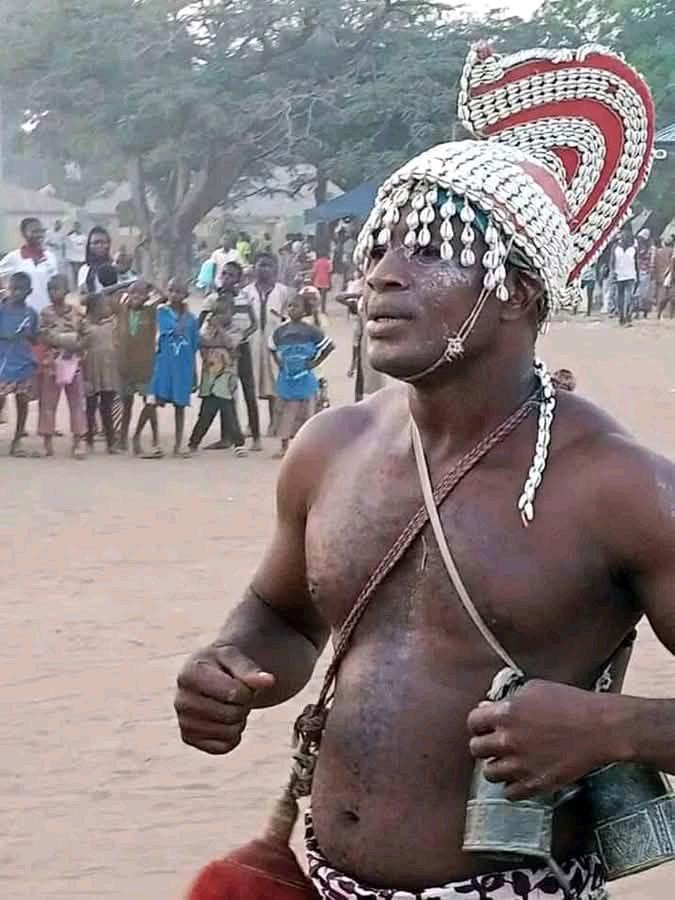
History of the Bassa People of Nigeria
By SAMUEL, Jephthah Zainaba
+234 812 797 4628
jephthahzainaba@gmail.com
Somewhere in Africa lies a people known as the Bassa. The name itself can be confusing, for communities bearing it are scattered across parts of both Eastern and Western Africa; notably in Nigeria, Cameroon, Liberia, Sierra Leone, Ivory Coast, and along the Liberian coast.
In the wider sense, the Bassa form part of a much larger ethnic cluster known as the Kru. Alongside the Bassa, the Kru include the Bété, Krumen, Guéré, Grebo, Klao, Krahn, and Jebo peoples. These groups share striking similarities in their cultural histories, occupations, religious practices, political systems, and other aspects of life.
The Kru are believed to have migrated from the Nilotic region of Eastern Africa to their present locations. Some traditions hold that the Bassa, and indeed the Kru as a whole, came from Egypt, while others suggest South Sudan as their place of origin. Those who mention Egypt rarely clarify whether they mean the modern Arab Republic or the ancient Nile Valley civilisation (3150 BCE – 30 BCE). Either way, both claims point to the Nile as the cradle of their beginnings.
The Bassa in Nigeria
Within Nigeria, the Bassa-speaking people stand apart as a distinctive tribe with notable socio-political and economic influence. They are renowned for their industrious nature: working diligently across various fields; though their achievements often remain understated in the national narrative.
They are indigenous to the central region of Nigeria, commonly called the North Central or Middle Belt, a zone comprising the Federal Capital Territory, Nasarawa, Kogi, Kwara, Plateau, Benue, and Niger States. The Bassa are among the most populous ethnic groups in the region. Over time, significant communities have also settled in parts of the South West such as Oyo, Kwara, and Benin; and in Kaduna State.
Migration and Early Settlements
Tradition holds that today’s Bassa of the central region originally came from a town near Zaria in Kaduna State known as Gabi (or Igebi). Early records, such as those of W. B. Baikie (1966), note:
> “The Bassa are said to have come originally from a town near Zaria, named Gabi.”
Their early headquarters was at Gumna, an important settlement whose history will be revisited shortly.
To preserve the memory of their origins, the Bassa sing to their ancestors:
Ga omu 'wi taa nụ Zarɛnya,
Serechi ma-ta.
Ga ada 'wi taa nụ Zarɛnya,
Serechi Ma-za.
Translation:
Mother died far away in Zaria,
Queen of Women.
Father died far away in Zaria,
King of Men.
Tales and Songs of the Past
Oral tradition remains a cornerstone of Bassa historical preservation. Songs often recall their ancestral homes, such as this:
Ga omu namɛ ne uye Gabi
Ga ada namɛ taa nụ Zarɛnya (Zaria)
E Dengeni ga shibi hiɛn jiye yo o
E Dengeni meni na mo rungo shɛmɛ
Translation:
Mother is in grave at Gabi,
Father is far away in Zaria,
Dengeni, father wants you to come back,
Dengeni, here, the flood is round the hill.
One common tale is that of Mr Spider, who lost his in-laws in a faraway hill town. Accompanied by the Toucan (Tecire) and the Toad (Ukwutu), he journeyed to their funeral. The Toucan sang:
Ci-ye Ci-ye Ci-ye...
Ci-ye Serechi Ma-za
Ci-ye Ci-ye Ci-ye...
Ci-ye Serechi Ma-ta
E'uji gazụ 'wi taa nụ Zarɛnya
Eeh! Mmh!
Ga gazụ hiɛn ti zhɛ u'wo.
These narratives, handed down through generations, carry both memory and meaning: affirming Zaria and its environs as the Bassa’s point of departure.
The Gumna Years and the Exodus
Temple records that the Bassa exodus began at Gumna, from where groups travelled north via Kamberi and Dawakin Bassa to Zamfara towns like Bangudu, Gedda, and Kotorkoshi. Others moved into Kontagora Province, some directly, others after sojourning at Bugu in what is now Nasarawa State.
Gumna itself, once an independent Bassa district in Niger State, suffered repeated attacks, particularly from the Kotangora forces. E. G. M. Dupigny in Gazetteers of Nupe Province wrote:
> “Gumna belongs to Bassa, suffered severely from Kotangora and fell under Kotangora.”
In pre-jihad times, Gumna was under Zaria’s sphere of influence. Linguistically, the Bassa language shares many similarities with Hausa, though differences in phonetic structures and alphabets distinguish them.
A War Remembered in a Parable
Bassa oral history tells of internecine conflict with the Hausa, worsened by alliances with the Fulbe during religious and political struggles in the north. The Bassa, loyal to their African Traditional Religion, resisted conversion and thus remained an obstacle to the dominance sought by their neighbours.
A parable is often told: of an orphan who joined others to farm, crossed a shallow river in the morning, only to find it flooded on their return. Families helped their own across, leaving the orphan behind. He attempted to cross alone, singing a lament — the same song that mourned the Bassa queen buried in Gabi and their king taken to Zaria. Eventually, he drowned.
The orphan symbolises the Bassa; the initial shallow crossing reflects their once-peaceful life, and the flood represents the war. His drowning marks the collapse of their resistance and their forced migration from Gumna and Gabi to their present settlements.
Dialects
Though united in ancestry, the Bassa speak several dialects shaped by geography and contact with neighbouring peoples. These include Bassa Gurmana, Bassa Komu, Bassa Kamuku, Bassa Kwali, Bassa Rukuba, and Bassa Akpanaja. These should not be confused with the Bassa Nge, who are of Nupe origin.
Occupation and Way of Life
The Bassa are primarily farmers, cultivating yam, millet, guinea corn, maize, and other staples. They also fish, rear livestock, weave, and make earthen pots. Some researchers have likened their mobility to that of the Fulani, as they frequently relocate in search of fertile farmland.
Organisations and Cultural Life
Prominent associations include the National Association of Bassa Students (NABS) and the Bassa Cultural and Development Union (BCDU), both active nationwide.
Cultural dances are varied and vibrant, with notable examples being the Ugunu, Ike masquerade, and Araga.
Notable Bassa Towns and Villages
Key settlements include: Gwagwalada, Oguma, Tawari, Ugya, Gwameni (Gbameni), Jiwa, Bassa, Turunku, Zwere, Nuku, Rubochi, Sauka, Shiroro, Oweito (Ihwetu), Rukubi, Awawa, Ubo, et cetera.
References
Dupigny, E. G. M. – Gazetteers of Nupe Province.
Labaran, S. S. (1996) – The Ugunu Cultural Festival of the Bassa People (Case Study of Toto LGA of Plateau State).
Labaran, S. S. (2007) – The Theology of Life after Death in African Traditional Religion (Case Study of the Bassa People of Nasarawa State).
Baikie, W. B. (1966) – Narrative of an Exploring Voyage up the Rivers Kwora and Binue in 1854.
Paul, W. (1993) – The Bassa Speaking People of Nigeria.
Oral interviews.
Likes (
0 )
comments (
0 )
2025-08-16 08:58:48